
Almond oil or coconut oil for hair is one of the most common confusions in natural hair care. Almond oil or coconut oil for hair is one of the biggest confusions in natural hair care. Many people don’t know which oil suits their hair type, scalp condition, and growth goals. Almond oil or coconut oil for hair growth. In many cases, people notice better results after using oil consistently for a few weeks.
Both oils nourish hair, but they work in very different ways depending on scalp type and hair condition. If you’re interested in another natural oil comparison, read our guide on Comparing Bhringraj and Onion Oil for Hair Growth to discover which oil may suit your hair care routine.
Natural oils have been used for hair care for centuries, especially in traditional beauty routines. Today, many people are moving away from chemical-based products and returning to simple remedies. Among all natural oils, two of the most popular choices are almond oil and coconut oil.
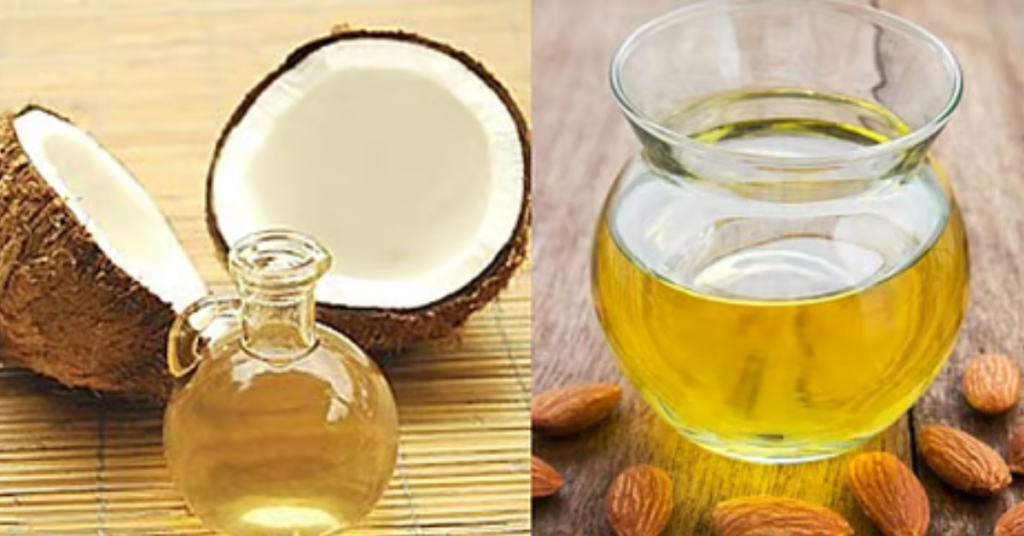
Table of Contents
But a common doubt remains — almond oil or coconut oil for hair, which one is actually better?
Almond oil or coconut oil for hair: quick answer
Both oils provide nourishment, improve texture, and support healthy hair. However, they work in completely different ways. Coconut oil mainly repairs damage and protects hair structure, while almond oil focuses on softness, scalp nutrition, and shine
In this article, you’ll clearly understand:
- The benefits of coconut oil
- The benefits of almond oil
- Which oil helps hair growth
- Which oil suits your hair type
- Whether you can use both together
By the end, you’ll know exactly which oil your hair truly needs
Coconut oil is one of the most researched natural oils for hair care. It contains fatty acids, especially lauric acid, which allows the oil to penetrate deep inside the hair shaft instead of just coating the surface.
Because of this deep penetration, coconut oil works more like a repair treatment than a simple moisturizer.
Overall, choosing almond oil or coconut oil for hair type coconut oil suits very dry and damaged hair, while almond oil works better for regular nourishment and daily use.
benefits of natural oils for hair
Key Benefits
Coconut Oil

Deep penetration
Prevents protein loss
Best for damaged hair
Reduces dandruff
Heavier oil
Best for dry hair
Almond Oil

- Light penetration
- Adds shine
- Controls frizz
- Non-sticky oil
- Good for oily scalp
- Best for daily use
- Mild dandruff support
1. Prevents Protein Loss
Hair is made of protein (keratin). Washing, heat styling, and pollution remove this protein. Coconut oil protects hair from this damage.
2. Repairs Dry and Damaged Hair
It nourishes from inside and reduces rough texture.
3. Controls Frizz
Helps smooth the hair cuticle and reduces puffiness.
4. Helps Dandruff
Its antimicrobial properties support scalp health.
5. Strengthens Hair Roots
Reduces breakage during combing and washing.
Best For
- Very dry hair
- Thick hair
- Curly or frizzy hair
- Damaged hair
- Split ends
Almond Oil for Hair – Benefits
Almond oil is lighter and richer in vitamins, especially Vitamin E, magnesium, and omega fatty acids. Unlike coconut oil, it doesn’t go deep inside the hair shaft — instead, it nourishes scalp and outer layer of hair.
This makes hair smoother, shinier, and easier to manage.
Key Benefits
1. Improves Hair Softness
Acts like a natural conditioner.
2. Supports Hair Fall Control
Nourishes scalp and strengthens roots.
3. Adds Shine
Makes dull hair look healthy.
4. Good for Sensitive Scalp
Very gentle and lightweight.
5. Perfect for Daily Use
Doesn’t feel sticky or heavy.
Best For
- Thin hair
- Oily scalp
- Mild hair fall
- Daily application
- Children and sensitive scalp
Almond Oil vs Coconut Oil (Comparison)
| Feature | Coconut Oil | Almond Oil |
|---|---|---|
| Texture | Heavy | Light |
| Main Action | Deep repair | Surface nourishment |
| Best For | Damaged hair | Softness & shine |
| Hair Fall | Moderate help | Better help |
| Daily Use | Not ideal | Yes |
| Scalp Type | Dry scalp | Normal or oily scalp |
Which Oil Is Better for Hair Growth?
Both oils support growth — but in different ways.
Coconut oil improves growth indirectly by preventing breakage. Almond oil or coconut oil for dry hair. Apply only a small amount of oil; over-oiling can attract dust and make hair greasy faster. Hair grows longer because it stops snapping.
Almond oil improves growth by nourishing scalp and follicles.
👉 So:
- Weak, breaking hair → Coconut oil works better
- Hair fall from roots → Almond oil works better
Which Oil Should You Choose?
Choose based on your hair problem:
- Dry & rough hair → Coconut oil
- Hair fall → Almond oil
- Frizzy hair → Coconut oil
- Daily styling → Almond oil
- Thin hair → Almond oil
- Thick damaged hair → Coconut oil
Can You Use Both Together? (Best Method)

Yes — this is actually the most effective method. almond oil or coconut oil for frizzy hair
DIY Oil Mix
- 2 tbsp coconut oil
- 1 tbsp almond oil
Warm slightly → massage scalp → leave 30 minutes → wash.
Read our article on The Best Hair Growth Tips From Dermatologists for additional expert-backed advice on maintaining healthy hair.
Final Conclusion
This gives repair + softness together.
There is no single “best” oil for everyone. The right choice depends on your hair condition.
- Coconut oil repairs damage and protects hair structure
- Almond oil improves softness, shine, and scalp nutrition
If your hair is dry and damaged, coconut oil will help more.
If your hair is dull, falling, or thin, almond oil is a better choice.
For maximum benefit, using both oils together is often the most balanced solution.
If you have scalp irritation or sudden heavy hair loss, consult a dermatologist before trying home remedies.
Frequently Asked Questions
Q1. Can I mix almond oil and coconut oil for hair?
Yes. Mixing both oils provides deep repair and surface nourishment together.
Q2. Which oil grows hair faster?
Neither grows hair instantly. Coconut prevents breakage while almond improves scalp health — both support growth over time.
Q3. Is almond oil good for dandruff?
It helps mild dryness but severe dandruff responds better to coconut oil.
Q4. Can I apply coconut oil daily?
Not recommended for daily use, especially for oily scalp. 2–3 times per week is enough.
Q5. Which oil is best for oily scalp?
Almond oil is better because it is lightweight.
About the Author – Richeya
I’m Richeya, and I share natural hair care tips and simple home remedies that I research and learn through traditional practices and trusted health sources. My aim is to make everyday self-care easy and practical for readers..